I have covered lasers and hair growth on this blog a number of times in the past. A spate of new studies on this subject suggest an emphasis on laser light wavelength during treatment.
New Low Level Laser Therapy Hair Studies
When people discuss laser treatments for hair loss, low-level laser therapy (LLLT) is usually what they mean. There have been many studies done in the past that show LLLT to be beneficial towards scalp hair growth. However, a large number of those studies have been of subpar quality (e.g., small sample size, bad photos) or biased (e.g., sponsored by a laser device manufacturer).
So this subject remains somewhat controversial. However, in the past month, three new studies have been published in support of low level laser therapy to treat hair loss:
- A 2017 study from China concluded that low level laser therapy stimulates hair growth in mice via upregulating the expression of Wnt10b and β-catenin. Hair follicle count remained the same in LLLT treated mice versus untreated mice, but hair length increased in the former. If this holds true in humans, perhaps LLLT can really make existing hair stronger and less likely to die from the attack by dihydrotestosterone (or at least prolong the battle). However, long-lost hair is probably not going to return from LLLT.
- A 2017 study from Iran tested a new laser scanner device (with a combination 655 nm red laser plus 808 nm infrared laser) by comparing it with a 655 nm red light laser hat. Both products led to hair growth benefits, but the laser scanner was superior. So laser wavelength may make a difference in outcome.
- A 2017 study from Egypt on female hair loss sufferers found that combination LLLT+Minoxidil 5% treatment led to the better outcomes (measured via Ludwig scale classification and patient satisfaction) in comparison to LLLT only or Minoxidil 5% only treatments.
LLLT Wavelength: Blue Light > Red Light?
A 2017 study via a European collaboration effort found that a UV-free blue light laser (453 nm wavelength) led to hair growth via prolongation of the anagen phase of the hair cycle, but a red light laser (689 nm length) did not do the same. Update: February 2021 — From the same scientists, a new study on blue light, cryptochrome 1 (CRY1) and hair growth.
This result is surprising since most commercially available LLLT laser products (combs, caps, helmets) are of around 650 nm wavelength (i.e., in the red light spectrum). Interestingly, a 2015 study from South Korea found that 830 nm laser was superior to lower wavelength lasers (of 632 nm, 670 nm and 785 nm) when it came to hair growth in rats.
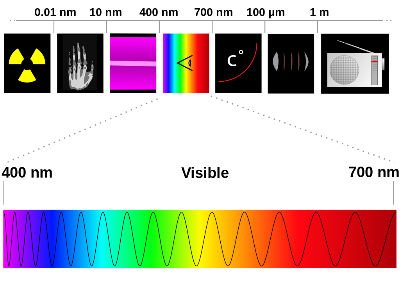
The above mentioned European study also made an important finding: “We provide the first evidence that OPN2 and OPN3 are expressed in human hair follicles”.
Update: A November 2021 report finds that photobiomodulation response from 660 nm is more durable than that from 980 nm.
Update: A June 2021 report finds that blue light therapy is a promising therapy for patients affected by androgenetic alopecia. Moreover, blue light-emitting diodes seem to darken grey hair in some people.
Combining Fractional CO2 Laser and Hair Growth Factors
I discussed fractional lasers and hair growth in a post in 2015. Now a new study from China finds that a combination treatment using carbon dioxide fractional laser treatment plus growth factors is significantly superior to using growth factors alone.