Why am I discussing the best hair fibers (also known as hair loss concealers) on a hair loss cure site? Largely because of my own great results from trying out Toppik hair building fibers in the past.
When I first wrote this post, there were only five or so well known concealers in the market. In 2024, there are well over twenty. I list the top 11 best hair loss concealers in the second half of this post further below.
My Experience with Toppik Hair Building Fibers
In 2016, I got a haircut and really disliked seeing an increasingly visible small bald spot in my receding hairline. The frontal scalp region frames ones face, and my thinning hair and bald patch in that area was annoying.
Therefore, for the first time in my life I decided to try out a hair loss concealer (Toppik hair building fibers) seriously. I was doing this for largely experimentation purposes, with no desire for long-term daily usage.
I was not keen to try out a hair loss treatment such as scalp micropigmentation, since I prefer longer hair. Note that while scalp micropigmentation and tricopigmentation can both give the illusion of longer hair, they are still in 2-dimensional format rather than 3-dimensional format.
Initially I had reservations about my experiment due to possible hair fiber side effects and other issues such as: scalp rashes and itchiness; a messy spray type application process; rain and wind causing some of the powder or hair fibers (if not waterproof) to run onto my forehead; the color of the hair loss concealer not exactly matching my natural hair color; the dye discoloring my pillow; the fibers not sticking to my hair; and finally, I did not want to become addicted to the product! Nevertheless, I decided to proceed.
I chose to try Toppik because it was one of three popular highly rated products (the others being Caboki and Dermmatch) that I had heard of over and over for many years. Make sure to see the comprehensive list of the best hair fibers (also spelled “fibres”) and concealers based on ratings and reviews further below.
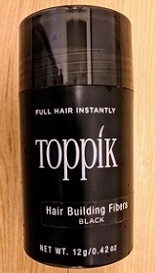
For around five consecutive days after my haircut, I sprinkled a small quantity of the concealer onto the small barren patch of my frontal scalp region. I did this every morning after a shower, once my hair was totally dry. I was quite impressed at the ease of the process of applying Toppik. It was not messy whatsoever and had few disadvantages other than not being entirely waterproof.
More importantly, the results were excellent. Just a few shakes/sprinkles of Toppik black were sufficient to totally cover my small bald region. Moreover, the product never came off during the course of the day (even in significant wind) unless I happened to sleep on a bed and rub my scalp against a pillow for a significant period of time.
Even then, the pillow did not become dirty. The hair loss concealer fibers just came off without discoloring anything they fell on. Showering the next day removed all the product from my hair, without getting the bathtub dirty. All in all, I was quite impressed with Toppik and therefore decided to write this post.
The Best Reviewed Hair Loss Fibers and Concealers
While far from being a permanent solution for hair loss, hair loss concealers are a great camouflaging option for many people. Best results and greatest satisfaction will be attained by people with minimal totally bald patches on their scalps. However, there are many videos on YouTube where hair building fibers are even very helpful for people with extensive hair loss. Amazon.com reviews of virtually all hair loss fibers and bald spot concealers are generally favorable. Women are also often very pleased with hair loss fibers.
Below, I list and compare the most popular hair loss concealers out there based on number of Amazon reviews (if there are many versions of a product that are sold separately, I only consider the most reviewed one). Keep in mind that there are many fake reviews out there in the online world. You should pay most attention to the ratings that come from verified users who have reviewed a diverse range of products for at least a few years.
Virtually all of these best hair loss concealers are deemed to work well for people of all ethnicities, as well as for both men and women. Just make sure to pick the right color for your particular hair type and check that the material is waterproof.
Note that hair loss concealers come in three types:
- Fibers Concealers. The most popular type.
- Liquid concealers. Usually in a spray form, though creams and gels are also available.
- Powder concealers. Similar to makeup and camouflage products.
The Best Hair Loss Concealers in 2024
Toppik Hair Building Keratin (Wool) Hair Fibers
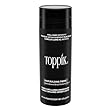
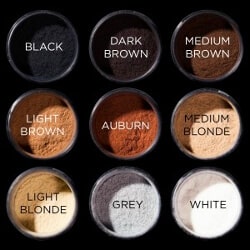
This is the bestselling hair loss concealer product on Amazon with almost 35,000 reviews averaging 4.4/5 stars at the time of updating this post in 2024. As discussed earlier, I used this product (12 gram version) and was very pleased with it. Be careful that you pick the correct color (nine choices) and size options before buying Toppik. As you can tell from the reviews, a lot of women love this product too. My own salt shaker type container of Toppik is made in the US by a company called Spencer Forrest. The main ingredients are keratin, silica, ammonium chloride and DMDM Hydantoin (plus added artificial colors). The keratin is sourced from wool according to the Toppik website’s FAQ section.
Each small bottle will last for a month or two depending on extent of daily use and extent of balding area. Note that I did not use a Toppik brand FiberHold Spray to cover bald spots. The hair concealer spray for thinning hair is recommended for concurrent use with the fibres for best results. Neither did I use the Toppik Spray Applicator that is supposed to help make the application process more precise.
Also note that while the company’s website states that rain will not remove the fibers from your scalp, I have my doubts. Many reviewers suggest that scalp concealers for thinning hair are never fully waterproof. You probably want to avoid heavy rain when using Toppik or any bald spot concealer products.
Boldify Hair Building Fibers
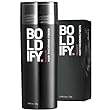
Boldify hair fibers have become extremely popular in recent years. A few years ago, I did not even know this company’s name. The product has rapidly aquired an insane 28,200 reviews averaging 4.3/5 stars as of 2024. It now competes with Toppik when it comes to the most popular hair loss concealers or fibers. Customers claim that Boldify is easy to use and apply. The smallest size option is 0.43 fl oz (12g) and at $15, it is similarly priced to Toppik. In comes in shades black, auburn, brown, blonde and grey. For even more scalp coverage, Boldify hairline powder may also be a good option for your needs.
XFusion Keratin (Wool) Fibers
This is a product that I had never heard about before I started writing this post. Apparently, despite having its own website, XFusion is made by the same US-based company (Spencer Forrest) that makes Toppik and contains the same wool based keratin ingredient. On Amazon, the product currently has over 3,570 ratings averaging 4.5/5 stars. This XFusion 28 gram large size container is significantly cheaper in comparison to Toppik for the same quantity of product. It is available in nine different colors, although each option is sold on separate product pages. (Note that Spencer Forrest also produces a third line of hair concealer products called Couvre).
Caboki Natural (Gossypium Herbaceum Cotton) Hair Loss Concealer
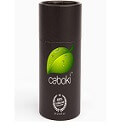
I have seen Caboki ads all over the internet during the past several years. On Amazon, the product has 3,130 reviews averaging 4.4/5 stars as of today. The great thing about this product is that it seems to be totally natural per the list of ingredients: “Moroccan Gossypium Herbaceum and mineral-based colorants (natural iron oxide)”. On the company’s website they are currently offering a free sample, though you pay for shipping. The manufacturer is headquartered in the US. Caboki is offered in seven different color choices. It seems like the two most compared hair loss concealers by hair loss consumers are Toppik versus Caboki.
Febron Bald Spot Concealer Filler
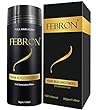
Febron is yet another newly popular name in hair concealment products. The Febron hair volumizing fibers are considered to be natural and undetectable. The complimenting Febron FiberHold Spray will lock the synthetic fibers in place and not leave any residue. Customer ratings average 4.4/5 stars based on 2,950 reviews as of 2024.
Hair Illusion 100% Natural Human Hair Fibers
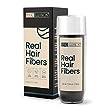
Hair Illusions’s very unique and interesting 100 percent natural human hair fiber product currently has 2,920 reviews averaging 3.9/5 stars. The product has eight color options for both men and women. However, on the company’s website, they do not have much information on where the human hair is sourced from. Hair Illusion is based in the US, but no actual address is shown on their website.
DermMatch Natural Botanical & Mineral Based Hair Loss Concealer
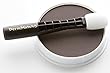
Long-time hair loss forum visitors will be aware that DermMatch has been one of the 3-4 most popular products out there when it comes to hair loss concealers. However, on Amazon, the product has surprisingly fewer reviews than would be expected: over 2,150 reviews averaging 4.1/5 stars as of today. The product is available in eight colors. Each DermMatch disc container lasts for an average of eight months according to the company’s website. Ingredients are all natural and include various emollients and botanicals. The US-based company that makes this product has been in business since 1992. Note that this product is not a fiber, but more like a scalp makeup product.
Nanogen Fibres
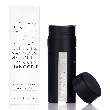
Nanogen is one of the most popular hair fibre brand in the UK. Several readers of this post also commented about this highly rated product. On the Amazon US site, it currently has 1,640 reviews with an average rating of 4.0/5 stars. However, on Amazon UK, it has a higher rating of 4.3 out of 5 stars. Nanogen uses “color lock technology”, which means that there will be no staining to your skin or clothing. The product is made from 100% natural keratin and contains no parabens.
Infinity Rayon Based Hair Building Micro-Fibers
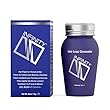
As of today, this Infinity hair fibers for women and men product had 999 reviews averaging 4.2/5 stars on Amazon. As of 2024, it is currently out of stock. I could not find anything about the location of the company on the company’s website. They do have a FAQ section and easily visible contact options. The ingredients of Infinity are listed as “Rayon; may contain: CI 47000, CI 14700, CI 42102.” The latter three are various artificial colors. Infinity comes in ten color options.
Cuvva Keratin Hair Fibers
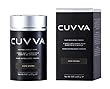
While several of the earlier mentioned keratin fiber products were made from wool, US-based Cuvva does not disclose that information and just states the following on its site: “Cuvva hair fibers are made up of pure, organic keratin protein, just like all human hair. They are charged with a precise level of electrostatic energy in order to form the maximum magnetic attraction to your thinnest hair. There are no harmful chemicals or additives whatsoever.” Available in four colors on Amazon, with 607 ratings averaging 4.1/5 stars at the moment.
Strand Maximizer Keratin Hair Fibers
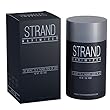
Yet another keratin based product, although unlike the earlier wool-based ones, this one does not disclose the exact type of keratin used. It used to have 1480 reviews averaging 4.0/5 stars on Amazon. However, it seems to be out of stock at the moment. It is available in ten unique colors and the company is based in the US.
Other Scalp Hair Fiber Products
Art Naturals (US) used to sell a unique cotton based hair fiber product in the past. I do not seen it on Amazon or Walmart at present. It was similar to Caboki, with the main ingredient being a type of cotton named Gossypium Herbaceum. On the company’s website, the full list of ingredients used to be listed as: “Gossypium Herbaceum fibre, castor oil hydrogenated, spice berry, ethanol, mineral based colorants (natural iron oxide).”
More recently, a US company named SureThik started selling 100% organic keratin protein based natural hair building fibers. SureThik microscopic hair fibers blend and bond electro-statically with existing hair. Another newer company is Thick Fiber, which claims to be wind and sweat resistant.
A UK based company named Gofybr used to free samples in the past, but this is not the case as of today. Another newer popular product is called Minute Hair Fibers, which comes in a spray in ten different colors.
When it comes to hair loss concealer powders, one of the most popular products is Joan Rivers Great Hair Day fill-in powder. L’Oréal and Clairol also sell very popular root touch-up and cover-up sprays and poders.
Hair Loss Concealer Colors
Hair loss concealers typically come in the following colors, listed in order of darkest to lightest:
- Black.
- Light, medium and dark brown.
- Red.
- Grey.
- Silver.
- Light, medium and dark blonde.
- White.
- Auburn.
For African American hair, note that there is also the Bigen hair dye treatment.