I originally wrote this post in 2020 and covered the hair growth effects of increasing prostaglandin E2 (PGE2) and prostaglandin F2α (PGF2α). Not to be confused with decreasing prostaglandin D2 (PGD2) for more hair.
Update: December 14, 2022
Dermaliq Therapeutics: Prostaglandin F2α Analogue Clinical Trials
Earlier today, Dermaliq Therapeutics (US) announced that it has begun Phase 1b/2a clinical trials for its DLQ01 solution (h/t “Nick”). This product is a topical Prostaglandin F2α analogue (thought to contain latanoprost) that will be used to grow hair in men with androgenetic alopecia (aka male pattern baldness). You can check out Dermaliq’s home page for its pipeline.
The DLQ01 topical formulation is based on hyliQ®, Dermaliq’s novel and proprietary platform technology. The trials will be conduced at Dr. Rodney Sinclair’s cliinic in Australia and will last for six months. Dr. Sinclair is currently also conducting trials for Hope Medicine’s HMI-115 prolactin blocker. Make sure to read that post for one trial volunteer’s biweekly updates.
According to Dr. Betsy Hughes-Formella (Chief Scientific Officer at Dermaliq):
“Dermaliq’s hyliQ® technology has the potential to transform follicular and dermal delivery of a broad range of active ingredients. DLQ01 is just the start of a promising pipeline targeting follicular delivery.”
June 27, 2020
In a number of past posts, I have discussed how hair loss is impacted by prostaglandins (lipids). Most of my focus has been on how a reduction in prostaglandin D2 (PGD2) levels benefits hair growth. In this post, I will discuss how an increase in levels of prostaglandin E2 (PGE2) and PGF2a (PGF2α) leads to hair growth.

It has also been hypothesized that the balance between PGE2 and PGD2 levels controls hair growth. Increased levels of PGD2 and reduced levels of PGE2 have been observed in the scalps of men suffering from androgenetic alopecia (AGA). Also of note, PGE2 is known to act synergistically with PGF2 alpha
PGE2 and Hair Growth
PGE2 (also known as dinoprostone) is a naturally occurring prostaglandin that is also known to interact with Wnt signaling. A number of studies have shown that increasing PGE2 levels on the scalp can benefit hair growth.
An interesting 2019 study found that one of the ways in which skin and tissue injury can sometimes lead to hair growth is via an increase in PGE2.
A 2018 case report from Spain found that the drug Omeprazole induced hypertrichosis (excessive body hair) in two children. This side effect resulted from a significant increase in prostaglandin E2 levels. Once Omeprazole therapy was stopped, the excess body hair entirely disappeared after six months.
One of the ways in which Minoxidil works to grow hair is via increasing PGE2 levels.
Dexamethasone and Sulfasalazine can both increase prostaglandin E2 levels significantly.
Natural products such as castor oil are thought to raise PGE2 levels, and potentially benefit hair growth. Even if true, such gains will be modest at best in my opinion.
PGF2α (aka PGF2a) and Hair Growth
PGF2α acts by binding to the prostaglandin F2α receptor. When injected into the body or amniotic sac, PGF2α can either induce labor or cause an abortion in a pregnant woman. PGF2a levels are higher in people with non-balding scalps.
In the past, I have written in detail about the glaucoma drug Bimatoprost. This drug is an analog of prostamide F2a, which is almost the same as prostaglandin F2a. Bimatoprost raises both PGF2a and PGE2 levels, and is therefore the key ingredient in eyelash hair growth drug Latisse.
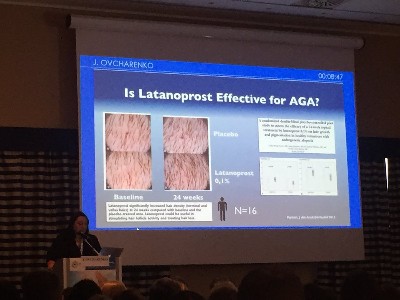
Another analogue of prostaglandin F2a is the well known drug Latanaprost. It prolongs the anagen phase of the hair cycle via the prostaglandin effect.
Another glaucoma and high eye pressure relief drug named Travoprost has a patent related to its scalp hair growth properties. Travaprost raises both PGF2α and PGE2 levels on the scalp when applied topically.
The only other major PGF2a analogue pharmaceutical on the market is called Carboprost.